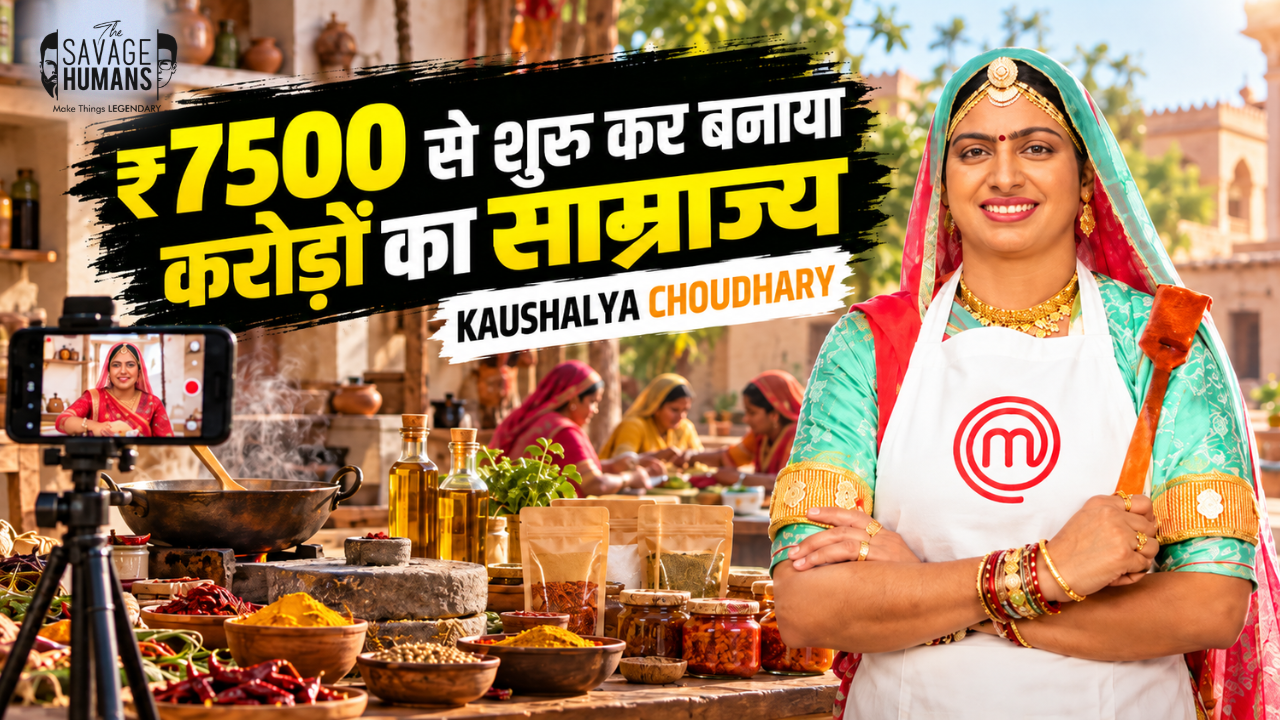
Kaushalya Choudhary Turned a ₹7,500 Smartphone Into a Marwari Food Brand Reaching Millions
In a small village near Jodhpur, Kaushalya Choudhary once had a very different picture of her future.
She had studied science in Class 12 and dreamed of becoming a doctor, but marriage and family responsibilities eventually took her life in another direction. What she did not know at the time was that the kitchen she spent so much time in would eventually become the place where she discovered a completely different career.
In 2017, with limited resources and a smartphone bought from her savings, Kaushalya began recording cooking videos from her home.
There was no studio, professional camera or production team.
There was simply a woman, her recipes and an idea that perhaps someone on the internet would want to watch them.
That small experiment eventually became Sidhi Marwadi, a food and cultural brand with a YouTube audience of more than 1.7 million people and a growing business built around traditional Rajasthani food.
The First Attempt Did Not Work
Kaushalya’s digital journey did not begin with instant success.
Her first cooking content was created in Hindi, and despite putting in the effort, the channel struggled to build the connection she was looking for. According to profiles of her journey, she spent nearly two years trying to make the Hindi-language channel work before realising that something fundamental was missing.
Then came a suggestion from her grandmother.
Instead of speaking in Hindi, why not speak in the language she had grown up with?
Kaushalya began creating content in Marwari, combining traditional Rajasthani recipes with the language, humour and everyday style of her own community.
The response was dramatically different.
In February 2019, she launched Sidhi Marwadi, and according to her own account and multiple profiles of her journey, the channel crossed 100,000 subscribers within about a month.
The lesson was bigger than YouTube.
The thing she initially thought might limit her, her regional language and deeply local style, turned out to be exactly what made people connect with her.
She Did Not Make Marwari Food Look Foreign to the Internet
Kaushalya’s videos stood out because they did not try to remove the village from the story.
Traditional recipes such as gatte ki sabzi, dal baati, churma and bharwa mirch were presented in the way they existed in her world, rather than being heavily transformed for a digital audience.
Her content became a bridge between a regional food culture and people who had either grown up eating those dishes or were discovering them for the first time. NDTV’s profile of Kaushalya highlighted how her Marwari-language cooking videos helped take traditional Rajasthani food and culture to audiences beyond Rajasthan.
By 2025, YourStory reported that her YouTube channel had crossed 1.6 million subscribers, while the current Sidhi Marwadi website says more than 1.7 million people now watch her recipes.
What began with a phone in a kitchen had become a media platform of its own.
Then MasterChef Came Calling

Her growing digital presence eventually took her from a village kitchen to one of India’s most recognisable cooking platforms.
Kaushalya participated in MasterChef India Season 8, where she reached the Top 12. NDTV reported that she was selected from around 40,000 participants and that the MasterChef team even travelled to her native village to document her background and cooking journey.
The significance of that moment was not simply television exposure.
For years, Kaushalya had been showing people traditional Rajasthani food through a phone screen. MasterChef gave that food, and the story behind it, a much larger national stage.
Her identity as a village-based cook was no longer something that had to be hidden behind a polished professional image.
It had become her strongest differentiator.
The Audience Eventually Asked a Different Question
As Kaushalya’s audience grew, people were not only watching her recipes.
They wanted the ingredients she used.
The question gradually changed from “How do you make this?” to “Where can I buy the same ingredients?”
That demand eventually became the foundation for Sidhi Marwadi as a food brand.
The company’s current story explains that the brand was built around bringing the traditional flavours shown in Kaushalya’s recipes into customers’ homes, with products including stone-ground spices, cold-pressed oils, traditional pickles and naturally dried desert vegetables.
The brand’s positioning is deliberately rooted in Rajasthan, with production taking place through its own village unit and traditional processes such as stone grinding and kachchi ghani oil extraction.
The smartphone that once helped Kaushalya share a recipe had effectively become the first link in a much larger chain: content, community, trust and eventually commerce.
Her Business Is Now Creating Opportunities for Other Women
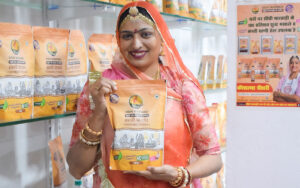
Perhaps the most meaningful part of the transformation is that Sidhi Marwadi is no longer only about Kaushalya.
The company’s current website says its village unit employs more than 35 women under its NaariGram initiative. The brand describes this as part of its broader focus on women-led work and rural employment.
That creates an interesting full-circle moment.
Kaushalya once used a small opportunity to create something for herself.
Today, the business she built is being used to create opportunities for other women as well.
The journey from a home kitchen to a food brand therefore cannot be measured only in subscribers, products or stores.
It can also be measured in the number of people who now have a reason to believe that their own skills can become economically valuable.
She Did Not Leave Her Roots Behind to Become Successful
There is something particularly powerful about Kaushalya’s journey.
Her first attempt became successful only after she stopped trying to make her content look more universal and started making it more personal.
She spoke the language she grew up with.
She cooked the food she knew.
She showed the culture she came from.
And instead of becoming a limitation, that authenticity became the foundation of her audience and eventually her business.
Today, Sidhi Marwadi describes itself as an e-commerce and social platform built around Rajasthan’s traditional food and culture, while its products are being developed and sold beyond the original village audience.
The Savage Humans Take

Kaushalya Choudhary’s story is not really about how a ₹7,500 phone changed someone’s life.
It is about what she did after she picked it up.
She failed with one YouTube channel, changed her approach, embraced her language, built an audience around her culture and then listened when that audience asked for the products behind her recipes.
That is what turned a kitchen into a platform and a platform into a business.
And perhaps the biggest lesson is this:
Sometimes the thing you are tempted to hide because it feels too local, too ordinary or too traditional is exactly what the world is waiting to discover.