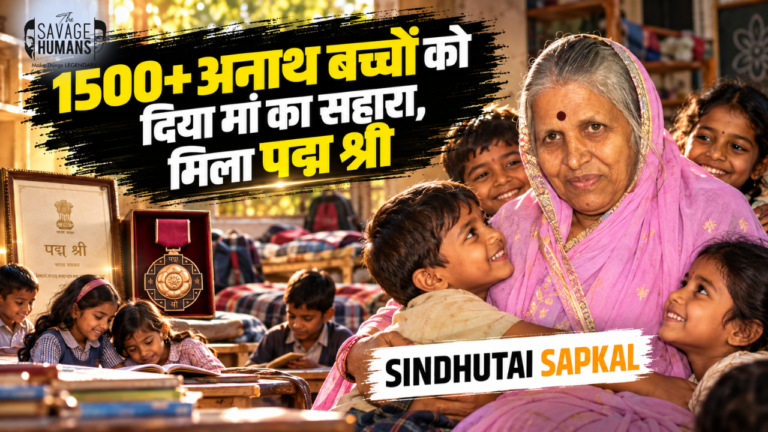
Pooja Sharma
performs the last rites
nobody else will
For years she has cremated unclaimed bodies in Delhi — people with no family left to do it, or none who came.
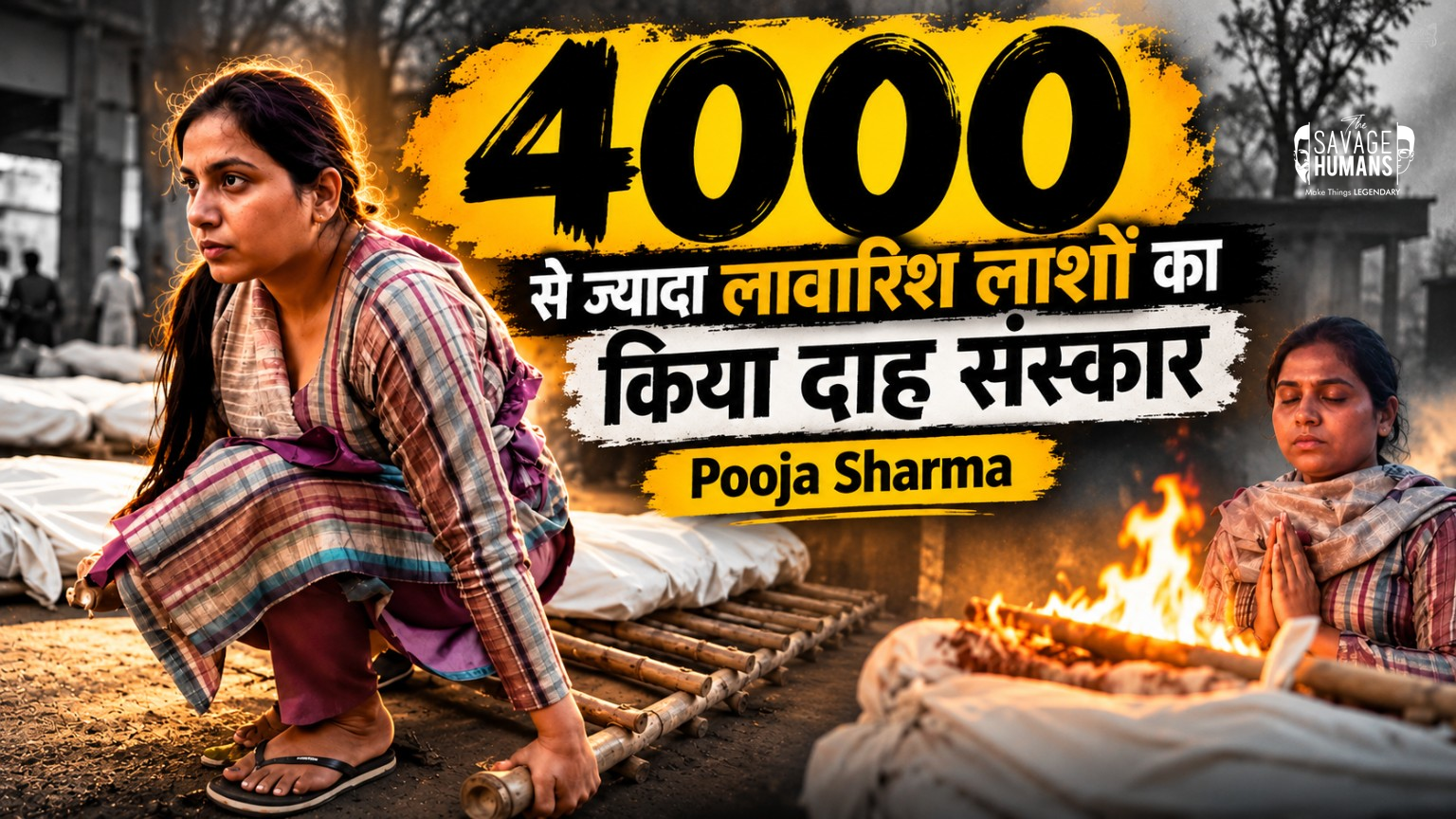
Some people spend their lives trying to escape the pain they have experienced. Others find a way to turn that pain into something that gives meaning to the lives of people they may never even meet.
Pooja Sharma belongs to the second category.
A resident of Shahdara, Delhi, Pooja has performed the last rites of more than 4,000 unclaimed and unidentified bodies, ensuring that people who die without family or anyone to claim them receive a dignified farewell. Her work is carried out through Bright the Soul Foundation, an organization she established after a personal tragedy changed the course of her life.
For Pooja, this is not simply social work. It is a responsibility born from a moment when she experienced what it means to lose someone and face the world without the support one desperately needs.
The Day Her World Fell Apart
Before this journey began, Pooja was building a life that looked very different from the one she leads today.
She held a postgraduate degree in social work, worked as an HIV counsellor at a government hospital and was pursuing a law degree, with aspirations of becoming a judge. Her life was shaped by professional ambitions and the ordinary hopes of a young woman looking towards her future.
But on 13 March 2022, everything changed.
Her elder brother was killed following a minor altercation. According to Pooja’s account, she called out for help as the attack unfolded, but no one came forward. She eventually carried her injured brother to Guru Teg Bahadur Hospital, where doctors declared him dead.
The tragedy was made even more devastating by the circumstances at home. Her mother had already passed away, and when her father learnt of his son’s death, he collapsed and slipped into a coma. Pooja was suddenly left to navigate an unbearable loss while the rest of her family struggled to cope with the shock.
There was also a responsibility that society traditionally expected a male family member to fulfil: performing her brother’s last rites.
With no one else able to take charge, Pooja stepped forward herself.
She tied a turban and performed the funeral rites of the brother she had just lost. It was an act that demanded a strength she could hardly have imagined needing only days earlier.
A Cremation Ground, a Handful of Ashes and a Promise
The moment that transformed Pooja’s grief into a mission came after her brother’s cremation.
When she returned to collect his ashes, the emotional weight of everything she had endured became overwhelming. In an interview with The Times of India, she recalled holding a Shivling and crying uncontrollably before rubbing her brother’s ashes over her body. She described that experience as the moment she made a decision that would define the rest of her life.
She had seen how difficult it was for a family to arrange a dignified farewell, even when someone was loved and remembered. She could not stop thinking about those who had no family waiting for them, no one to identify their remains and no one to ensure that their final journey was conducted with care.
Her resolve was clear: if someone died without anyone to perform their last rites, she would step forward.
What began as a deeply personal promise gradually became a commitment to people she had never known, whose lives might have ended in anonymity but whose dignity she believed still deserved protection.
The People Who Die Without Anyone to Claim Them
Every city has stories that remain unseen, including the lives of people who die far from their families, lose contact with relatives or are never identified after their deaths.
In Delhi, unidentified bodies are handled through a process involving hospitals and the police. When relatives cannot be located after the required procedures, the bodies may eventually be buried or cremated. For the deceased, the process can become a final chapter without the presence of anyone who knew their name, their memories or the life they had lived.
This is the gap Pooja has chosen to address.
She maintains contact with hospital mortuaries and works to arrange the transportation of unclaimed bodies to cremation grounds, where she performs their last rites. Her work involves far more than the ceremony itself: it requires coordination, transport arrangements, funeral materials and the financial resources needed to ensure that each person receives a respectful farewell.
The costs are substantial for an individual undertaking this responsibility. A 2024 report by MyNation estimated that performing the last rites of one body could cost approximately ₹2,200, while Pooja told Hindustan that the expenses associated with cremation could range from ₹1,000 to ₹1,200, depending on the circumstances.
For someone who has taken on this work without the resources of a large institution, every funeral represents another practical and financial challenge.
Yet she continues.
A Farewell That Does Not End at the Cremation Ground
For Pooja, the responsibility does not end when the funeral pyre is extinguished.
She collects the ashes and travels to Haridwar to immerse them in the Ganga, following the rituals associated with the deceased’s final journey. Reports and the foundation’s own account describe her undertaking these immersions on Amavasya, the new-moon day, and performing additional rites such as Pind Daan.
The practice is particularly meaningful because the people whose ashes she carries may have no relatives left to remember them or complete these rituals.
She performs the ceremonies without restricting her work to one community or religion. In an interview with Arab News, Pooja explained that she has conducted last rites for Hindus, Christians, Muslims and people from other faiths, guided by the belief that every human being deserves respect in life and after death.
In a society where funeral customs are deeply connected to family, identity and faith, her approach places human dignity above social divisions.
Bright the Soul Foundation: A Mission Beyond Death
As the work grew, Pooja established Bright the Soul Foundation to give her efforts a more organized structure.
The foundation’s stated activities extend beyond the last rites of unclaimed bodies. Its website describes assistance for people facing extreme vulnerability, including individuals living with HIV/AIDS, women who have survived sexual violence, people battling cancer and other serious illnesses, senior citizens and those without adequate support systems. The organization also lists food, clothing and medical assistance among its services.
This broader mission reveals another dimension of Pooja’s work.
She is not only concerned with those who have been forgotten after death. She also wants to support people who are neglected, isolated or struggling to access basic necessities while they are still alive.
The foundation’s stated vision is to build a community around compassion and service, where assistance is offered without discrimination and people are not abandoned simply because they lack resources or social support.
The Personal Cost of Choosing This Path
It is easy to describe Pooja’s work as extraordinary, but doing so without acknowledging its personal cost would leave out a significant part of her story.
She left her job as an HIV counsellor to devote herself to this mission. Early reports described how she relied on financial support from her father and grandmother, exhausted her personal savings and reduced her own expenses to pay for funeral arrangements. Her work also brought social isolation and the burden of challenging expectations about what women should or should not do at cremation grounds.
In an interview with The Guardian, she spoke about how her work had affected her relationships and marriage prospects, yet she continued because the service gave her a sense of peace and purpose.
Her decision was not made in pursuit of recognition. It required her to reorganise her life around a responsibility that most people would find emotionally and physically difficult to sustain.
And still, she returns to the mortuaries, the cremation grounds and the people who need someone to stand beside them for the final time.
When a Stranger Becomes Family
One of the most moving aspects of Pooja’s work is that the people she helps may never know her name.
She does not share their childhood memories, know their favourite food or understand the circumstances that brought them to the city. Yet, when they die without anyone to claim them, she takes on a responsibility usually reserved for the closest members of a family.
A report by MyNation recounts the case of a family whose son had left home and could not be traced. After his death, the family learnt that Pooja had performed his last rites, and they expressed gratitude for the dignity she had given him in their absence.
It is a reminder that the work she does is not only for the deceased. It can also bring comfort to families who discover, sometimes too late, that someone they loved did not have to leave the world entirely alone.
The Savage Humans Take
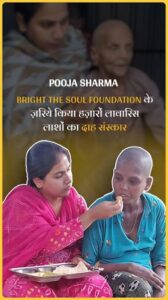
Pooja Sharma’s story begins with a tragedy that no family should have to endure, but it does not end there.
She experienced the helplessness of losing someone she loved, the loneliness of facing a crisis without support and the responsibility of arranging a farewell when her own world was falling apart. Instead of allowing that experience to remain only a source of pain, she turned it into a promise to stand beside people who have no one else.
More than 4,000 unclaimed bodies have received a dignified farewell through her efforts, according to published reports. But the deeper meaning of her work cannot be captured by a number alone. It lies in the simple conviction that a person’s dignity does not disappear when their life ends.
Pooja Sharma reminds us that compassion is not always about changing someone’s life. Sometimes, it is about making sure that even in death, no human being is treated as though they never mattered.
The Savage Humans salutes Pooja Sharma for choosing to become the family that thousands of forgotten people did not have.

Pull quote from the interview goes here — her words, verbatim, no tidying up.