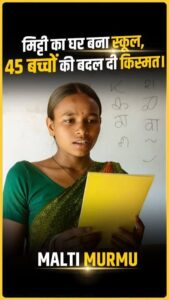
Malati Murmu: The Woman Who Turned Her Mud House Into a Free School
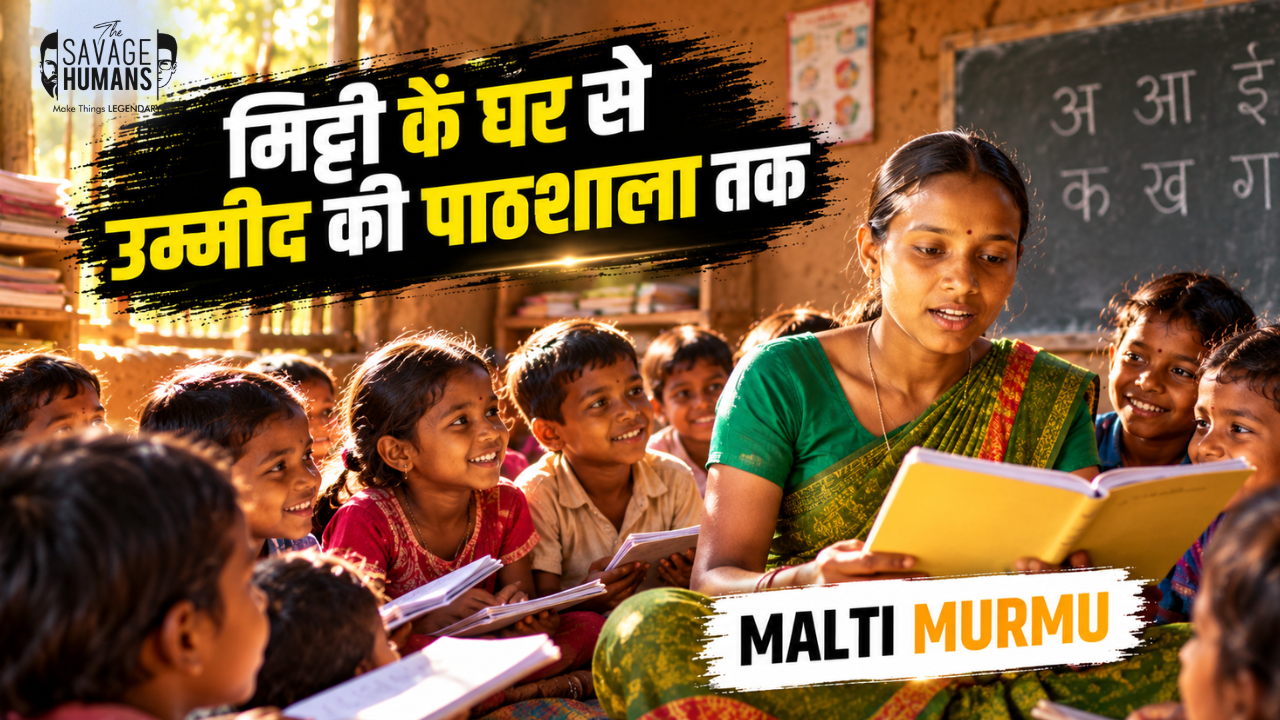
For children growing up in remote villages, going to school is not always as simple as walking into a classroom. Distance, poverty, lack of transport and limited awareness can decide whether a child studies or starts working at home instead.
In Jiling Sereng, a remote tribal village in West Bengal’s Purulia district, Malati Murmu saw this reality soon after moving there after her marriage.
Instead of waiting for better infrastructure or outside help, she started teaching children herself.
What began inside her mud house in 2020 eventually became a free learning centre attended by around 45 children.
Malati Murmu Came to Jiling Sereng in 2019
Malati moved to Jiling Sereng in 2019 after her marriage to Banka Murmu. Located in the Ayodhya Hills region of Purulia, the village is a remote tribal settlement where access to education has remained a challenge.
There was a primary school nearby, but many children were not regularly attending classes. Reports describe children spending their time helping with household work, collecting firewood or accompanying parents for daily-wage work. The distance to higher schools also made continuing education difficult.
Malati, who had studied up to Class 12, understood how important basic education could be.
She decided to do something with the education she had received.
She Started Teaching From Her Own Mud House
In 2020, Malati began teaching children from her own home.
There was no formal classroom, teaching staff or salary. She had limited resources, but she had books, a blackboard and the willingness to teach.
Initially, only a few children joined her classes. Malati also went from door to door, speaking to parents and encouraging them to send their children to study. Slowly, more families began supporting the idea.
The timing made her initiative even more important.
The COVID-19 pandemic had disrupted schooling across India. For children in remote communities, online education was often not a practical alternative because smartphones, internet access and even electricity were limited.
Malati’s home therefore became a place where children could continue learning when formal education was difficult to access.
Around 45 Children Now Study There
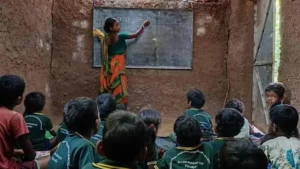
What started with a handful of students gradually grew.
Reports from 2025 and 2026 say around 45 children attend Malati’s classes. She teaches children from the early primary grades, with lessons including basic subjects and languages.
One important part of her approach is language.
Many of the children come from Santhal families, so Malati teaches them in Santali and gradually introduces Bengali and English. Teaching children in a language they understand helps make the first stage of learning easier for them.
The children sit on the floor and study in a simple structure. There are no conventional school facilities, but the basic purpose of a classroom is there: a place where children can learn every day.
The Village Eventually Helped Build the School
Malati’s initiative did not remain a one-woman effort.
As more children started attending, local residents began helping her. According to reports, villagers contributed books and helped create a modest structure with mud walls and a tin roof.
The learning centre eventually developed into a small two-room setup with blackboards. It still does not resemble a conventional school, but it gives the children a regular space for learning.
Her husband, Banka Murmu, has also supported the initiative.
He has spoken about the difficulties children face because secondary schools are far away. Jhalda is around 18 kilometres from the village, while Baghmundi, where there is a high school, is around 25 kilometres away. For families in the village, such distances can make continuing education difficult.
Malati Is a Teacher Without a Teaching Degree
Malati is not a formally appointed government teacher.
She studied until Class 12 and began teaching because she saw a need in her own community. Her story is therefore not about replacing the formal education system, but about creating an additional learning space where children were struggling to access regular education.
She also manages her responsibilities at home. Reports identify her as a mother of two children, and she has continued teaching alongside her family responsibilities.
Her students now arrive at the same place where she once simply lived.
A mud house that was meant to be a home became a classroom because the children around her needed one.
One Small Classroom, A Bigger Opportunity
Malati Murmu’s story comes from a village where educational challenges are closely connected with geography and poverty.
She did not begin with a large organisation, funding or a purpose-built school. She began with the resources available to her.
A few children became dozens. A home became a classroom. And eventually, the community became part of the effort.
Her work has also received wider media attention, bringing attention to the educational challenges faced by children in remote tribal communities.
The Savage Humans Take
Malati Murmu’s story is not about having everything required to start a school.
It is about recognising a problem close to you and beginning with what you already have.
She saw children who were struggling to continue their education. Instead of waiting for a perfect classroom, she opened the door of her own home.
Today, around 45 children come there to study.
Sometimes, the first step towards changing a child’s future is not a big institution. It can simply be one person deciding to start teaching.
Follow The Savage Humans for more stories of people creating change from where they are.